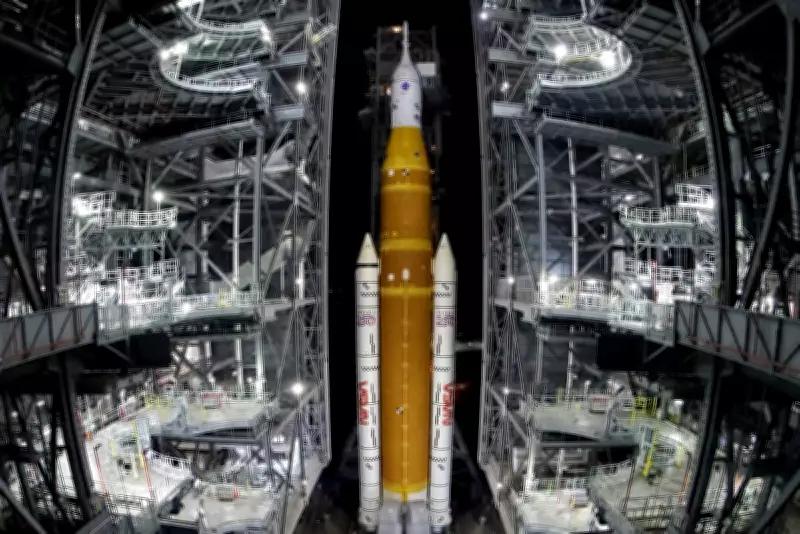
Artemis II Mission Rekindles Childhood Wonder of Space Exploration
NASA is once again reaching for the Moon with the Artemis II mission, a crewed fly-by that has reignited excitement and nostalgia for space adventure. For many who grew up in the late 1960s and early 1970s, this mission represents more than just a scientific endeavor; it taps into deep-seated emotions and childhood dreams inspired by teachers and the Apollo era.
The Nostalgic Pull of Space Dreams
In the late 1960s and early 1970s, fascination with rockets was fueled by passionate educators like Mr. Bispham, who taught science with religious fervor. He shared images of Apollo 11, NASA logos, and diagrams of the Saturn V rocket, making the Moon seem not just a celestial body but a symbol of the future. Space was perceived as clean, purposeful, and heroic, inspiring children to desire rocket sets over train sets.
Artemis II, while officially a rehearsal with no landing planned, feels like the reopening of a long-delayed promise. It evokes memories of the six Moon landings between 1969 and 1972, after which human spaceflight largely retreated to low Earth orbit, around 400 miles above Earth, where the International Space Station operates.
Challenges and Political Context
Modern missions face adult concerns such as the Van Allen radiation belts, discovered in 1958, which pose risks like radiation exposure and electronic damage. NASA has admitted to losing some of the technology from the Apollo era, an industrial amnesia that complicates current efforts. This contrasts with the Cold War era, when space exploration served as political theatre, with the US leaping ahead to the Moon to project technological and moral superiority.
Today, Artemis is often viewed as a revival of this political symbolism, with repeated promises from US presidents since the 1970s to return to the Moon, yet deadlines continually slip. The mission features a diverse crew, including NASA astronauts Christina Koch, Reid Wiseman, Victor Glover, and CSA astronaut Jeremy Hansen, highlighting ongoing international collaboration.
The Enduring Allure of Wonder
Despite scepticism and technical hurdles, Artemis II still captivates because the Moon has always been more about wonder than pure science. It serves as a mythic destination that encourages imagination and belief in humanity's potential to transcend earthly conflicts. As Roshan Doug reflects, this emotional pull remains strong, whatever the practical realities may be.