The launch of a government incentive to train pilots for active service marks its 88th anniversary this week. On July 23, 1938, Sir Kingsley Wood, Secretary of State for Air, announced the formation of the Civil Air Guard. Private flying clubs up and down the country were encouraged to train pilots between 18 to 50 for a likely upcoming war. Once trained, private pilots would be transferred to the RAF Reserve.
Financial Incentives and Rapid Uptake
The Air Ministry offered £25 to pilot members of flying clubs who had obtained an ‘A’ Licence. If they volunteered for the Civil Air Guard, this would be increased to £50, or £30 for those learning to fly on aircraft lighter than 1200 lbs. The Air Ministry also lifted the ban on learning to fly in foreign aircraft. By October 8, they had received 30,000 applications from 75 aero clubs nationwide. Most pilots in the Civil Air Guard would later transfer to the RAF or Fleet Air Arm after September 3, 1939.
Cinque Ports Flying Club at Lympne
At Lympne, the Cinque Ports Flying Club was eagerly involved and managed by Ann Davis, the widow of Bill Davis. She had taken over the role of manager/secretary of the CPFC in March 1938, following his death in a crash on the airfield which killed four people aboard his GA Monospar.
Uniforms and Training
Participants wore blue uniform overalls adorned with wings and a Civil Air Guard badge. This form of dress may have been issued upon qualification, as photographs of trainees show them in civilian clothes or white overalls.
One man to gain his wings under the scheme was Ron Giles, an engineering apprentice at Lympne who qualified as a pilot in 1939. The flying lessons cost him two shillings and sixpence a time and, as his wages were ten shillings a week, he took lessons in 20-minute or half-hour sessions during his lunch break. His first lesson was on September 5, 1938, with the chief flying instructor Tom Hackney in a B A Swallow G-AEYW, and his first solo flight was in a Swallow G-ADSF on October 31. He then progressed to a DH Gipsy Moth 1 G-ABOG.
Licence Test and Tragic Incident
Ron Giles took his A1 licence test flight in a Swallow on February 7, 1939. Questions had to be answered on air navigation, landing regulations, safety procedures and lighting of airfields. He said it was similar to answering questions from the Highway Code when learning to drive a car. Tragedy struck for another trainee in July 1939 when two aircraft crashed into each other over a cornfield close to Tilmanstone, near Deal. Donovan Pragnell, a member of the Civil Air Guard, was killed along with two others that day.
Rare Photographs and Upcoming Event
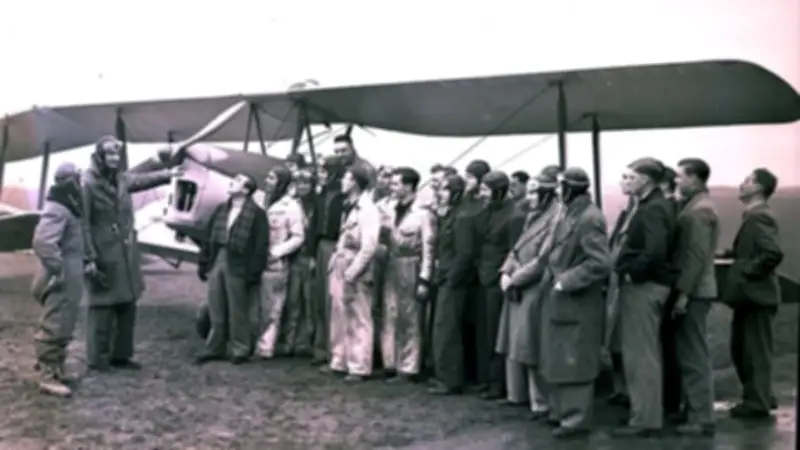
I was very kindly presented with some rare photographs of the Civil Air Guard at Lympne by Barry Duffield, a volunteer from the RAF Battle of Britain Memorial at Capel-le-Ferne. They show students in the classroom and a larger party out on the airfield being instructed on the Tiger Moth trainer. These pre-war photos offer a rare glimpse of this important aspect of the training of pilots for active service and Lympne Airfield’s history. Lympne Airfield History Society's next meeting is on September 1. John Simpson will give a presentation entitled Where Do You Think They Were Kidding Mr. Hitler? looking at the local Home Guard and their connections with the airfield. Meetings take place in Lympne church, doors open at 6.30pm and entry is £3. For more information, call 07508 708725 or email: johnsimpson43@btinternet.com