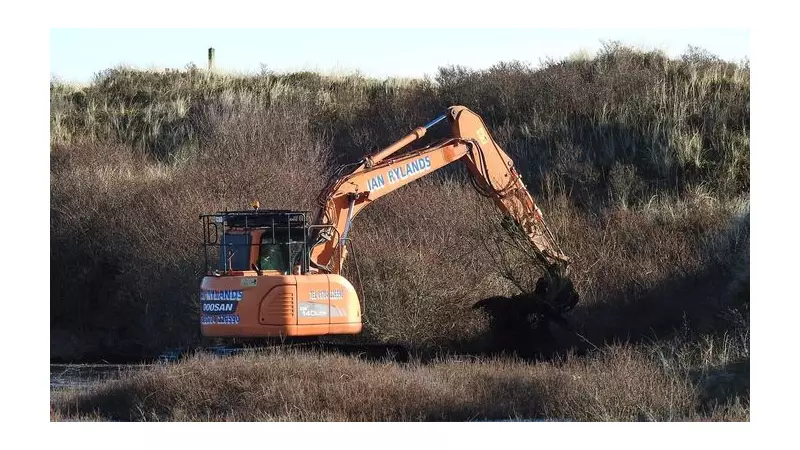
Contractors have moved onto the precious dune system at Ainsdale this week, marking a significant new phase in a long-term project to protect and restore one of the UK's most important coastal landscapes. The work forms a key part of Green Sefton's ongoing winter habitat management programme.
Restoring a Dynamic Landscape
Machinery is now active in the area of the Ainsdale Local Nature Reserve situated just south of the former Pontins site. Funded through the DEFRA-backed Higher Tier Countryside Stewardship scheme, the operation targets invasive birch scrub and Sea Buckthorn which have increasingly dominated the area.
While scrub offers a home for some adaptive species, experts warn it poses a major threat to the specialised flora and fauna that depend on open sand dunes. If left unchecked, this scrub would swiftly degrade biodiversity and blanket the open sandy areas that define this unique habitat.
Creating Space for Rare Wildlife
The primary goal is to excavate the invasive plants, thereby exposing the underlying sand and its dormant seed bank. This action is designed to reinvigorate former dune slacks—low-lying areas that should seasonally flood. When choked with scrub, these slacks cannot function as viable habitat.
This restoration is already yielding results. Sand Lizards, a key protected species, have been recorded in zones cleared during previous phases of work. The project also benefits ground-nesting birds, such as the Lapwing, which is now returning to breed in the area after an absence of several years. The ultimate aim is to make the landscape attractive again for the endangered Natterjack Toad.
Coexisting with Grazing Cattle
The contractors will operate for several weeks within existing cattle enclosures where English Longhorn cattle are winter grazing. The enclosures are spacious enough for the cattle to simply move to another section while the diggers work. Green Sefton has issued a reminder to visitors that all dogs must be kept on a lead in these fenced areas while cattle are present.
This warning follows a tragic incident last year where dog attacks led to the death of two sheep within the Ainsdale enclosures. Consequently, the local Public Space Protection Order has been amended. It is now a legal requirement for dogs to be on a lead within the fenced pens, rather than merely 'under control'.
This latest project complements similar successful habitat restoration work undertaken south of Shore Road in recent years. Now in its fifth year, the Higher Tier Countryside Stewardship programme underscores a vital truth: sand dunes, like many of the world's habitats, require active, careful management by humans to maintain their ecological value and spectacular beauty for future generations.