
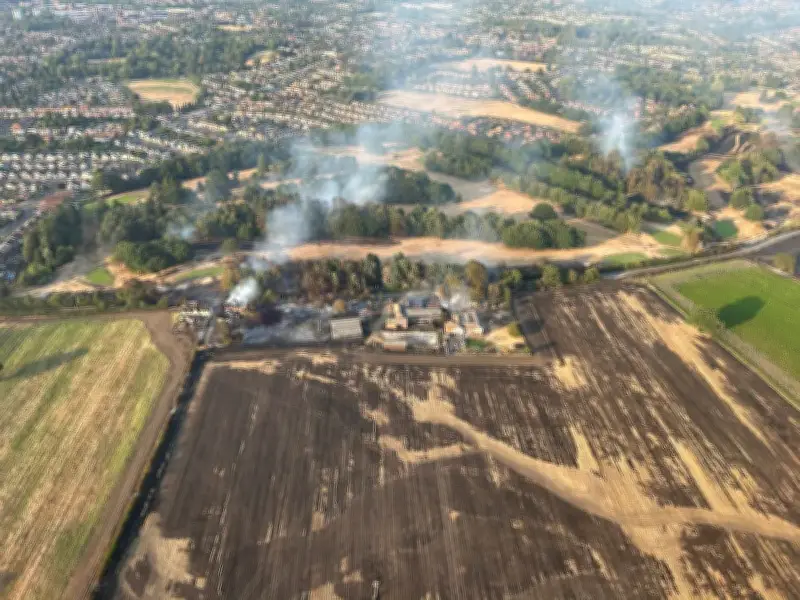
The UK needs dedicated fire-fighting planes and a national wildfire strategy, according to urgent recommendations from the Environment, Food and Rural Affairs (Efra) Committee. The call follows one of the most severe fire seasons on record, which saw more than 1,100 wildfires by mid-August 2026—surpassing the total for all of 2025.
Record-breaking season prompts urgent recommendations
The summer of 2026 was the UK’s hottest on record, bringing widespread drought in England and Wales. Major blazes were recorded across the UK, including Northern Ireland’s Mourne Mountains, the Cairngorms in Scotland, South Wales, and several locations in England. One fire in Stourbridge destroyed 19 homes.
On August 14, the situation was so severe that an emergency alert was issued to mobile phones across England and Wales warning of a “very high” national wildfire risk. The Efra Committee said in its report that wildfires forced evacuations, disrupted businesses, and destroyed habitats and landscapes in a matter of hours.
Committee calls for cultural shift and prevention measures
Alistair Carmichael, committee chairman, said: “Failure to do so will leave us all exposed to more of the same next year and every year until it is taken seriously.” He added: “This report offers a catalogue of actions the Government must prioritise as we adapt to a changing climate, but it also tells the story of how these terrifying incidents leave deep scars, not just on our landscapes, but in the minds of rural communities whose voices tend to be excluded.”
The committee warned that wildfires can no longer be considered rare or exceptional, as climate change increases both their frequency and severity. A national wildfire strategy is needed, the committee said, along with public awareness campaigns and restrictions on disposable barbecues during high-risk periods. Mr Carmichael said: “Britain needs a cultural shift that puts us in step with fire-savvy nations such as Australia.”
Gaps in preparedness and calls for aerial capabilities
The Efra Committee highlighted the extreme conditions faced by firefighters and pointed to gaps in the UK’s wildfire preparedness—from a lack of aerial firefighting equipment to difficulties sourcing water at remote sites. The UK currently has no dedicated firefighting aircraft, and its limited water-bombing planes are permanently stationed in Cyprus.
Most wildfires are started by human actions, such as littering, abandoned campfires, disposable barbecues, or deliberate ignition. The report called for a government-funded national wildfire prevention campaign, including wildfire risk indicators in weather forecasts. MPs also recommended temporary nationwide bans on disposable barbecues during high-risk periods and financial support for fire wardens in vulnerable areas.
Support for land managers and firefighter wellbeing
Mr Carmichael described these wardens—often landowners and managers—as “unsung heroes,” and said their largely voluntary work deserves more formal backing. The report recommended a government-backed “toolbox” of evidence-based options, including peatland restoration, rewetting, grazing, cutting, and prescribed burning.
MPs also called for more recognition of the role played by land managers and local communities—not only in fighting fires but in creating fire breaks, deploying equipment, and rescuing livestock. The committee said the physical and emotional toll on these communities must not be overlooked.
Fire and rescue services, particularly in rural areas, also face exceptional pressure, the report found. It called for action to improve firefighter wellbeing and for a clear implementation plan for new aerial firefighting capabilities by January 2027.
Mr Carmichael said: “Two consecutive, record-breaking years of wildfires should be ringing alarm bells in Westminster. We need to see Government preparing for 2027 now.”