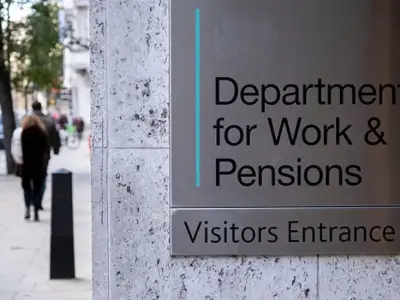
The Department for Work and Pensions (DWP) has confirmed its intention to abolish the Work Capability Assessment (WCA), a rule that has been in place since 2008 for benefits claimants. However, the abolition will not occur until the Timms Review on Personal Independence Payment (PIP) reports its findings.
Background of the Work Capability Assessment
The WCA was introduced in October 2008 by the UK government to evaluate claimants' ability to work. In a recent session in the House of Commons, Liberal Democrat MP Daisy Cooper inquired about the potential merits of ending multiple assessments for amputees to qualify for benefits.
Government Response
Labour MP Stephen Timms responded, stating that many disabled individuals and those with health conditions currently receive both Universal Credit (UC) and PIP, requiring them to undergo two separate assessments. This process, he noted, is complex, time-consuming, duplicative, and stressful for claimants.

The Pathways to Work Green Paper outlined the government's plan to end the link between capacity to work and additional financial support, as well as the binary categorization of claimants as able or unable to work. This will be achieved by abolishing the WCA.
Future Assessment System
Under the new system, any extra financial support for health conditions in UC will be assessed through a single PIP assessment in England and Wales, based on the impact of disability on daily living rather than capacity to work. However, due to its link with the PIP assessment, the abolition of the WCA will only take place after the Timms Review into PIP has reported. The government is currently considering how the future system will operate and will provide further information in due course.
Severe Conditions Criteria
Within the current system, some disabled people meet the Severe Conditions Criteria (SCC), which identify those with the most severe, lifelong health conditions or disabilities unlikely to improve. These individuals are not expected to ever be able to work, and reassessments are unlikely to provide new information. Consequently, they do not need reassessment unless their condition changes or improves.
The DWP and its assessment suppliers are committed to providing a quality, sensitive, and respectful service by conducting accurate and objective assessments. Where sufficient evidence exists, claimants will be assessed on a paper basis.