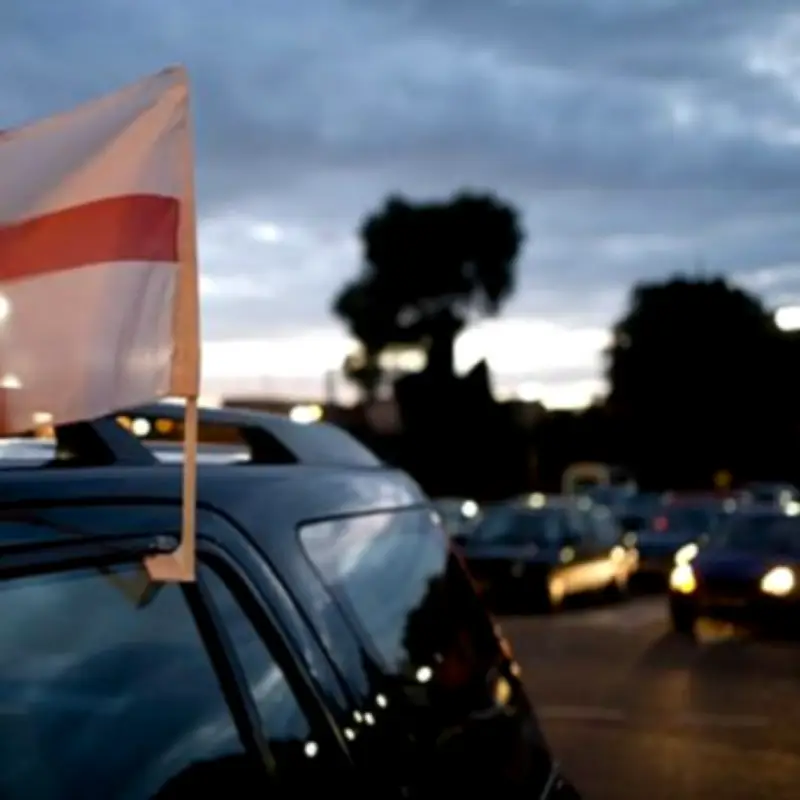
The law on flying an England flag from your house or car has been clarified ahead of the FIFA World Cup 2026, which begins this week. When it comes to attaching flags to your vehicle, there are specific rules Brits should know to avoid trouble.
Rules for Flying Flags on Cars
Drivers should be aware that flying flags are acceptable, but they cannot be displayed in a way that could block the driver's view of the road. It is very important that whatever flag you put up does not obstruct the driver's view of the windows or rear-view mirrors, as this could be a safety hazard.
Currently, the offence for placing flags on your vehicle that obstruct vision could result in a fine of £1,000 or possibly three points on your licence. A Labour Party government spokesperson said: “There is no specific law against flying a flag from your vehicle. We would simply encourage motorists to use their common sense to ensure their vision of the road isn’t impaired, and that it doesn’t jeopardise the safety of other road users. We shouldn’t hide our national flags which are a source of pride and identity.”

General Flag Flying Regulations
The government website includes detailed information on what the law is around flying any flag at a site or on your property. It explains that there are some standard conditions in place when it comes to flag flying, as well as some more specific regulations.
The website states: “All flags must be maintained in a condition that does not impair the overall visual appearance of the site, be kept in a safe condition, have the permission of the owner of the site on which they are displayed (this includes the Highway Authority if the sign is to be placed on highway land), not obscure or hinder the interpretation of official road, rail, waterway or aircraft signs, or otherwise make hazardous the use of these types of transport, and be removed carefully where so required by the planning authority.”
Subject to compliance with the standard conditions, there are three categories of flags: (a) flags which can be flown without consent of the local planning authority, (b) flags which do not need consent provided they comply with further restrictions (referred to as “deemed consent” in the Regulations), and (c) flags which require consent (“express consent”).
Flying the England Flag at Home
The good news is that flying your England flag (or Union Jack) from home should not need permission under the government guidelines. The website adds: “The above flags or their flagpoles must not display any advertisement or subject matter additional to the design of the flag, but the Regulations now highlight that you can attach a black mourning ribbon to either the flag or flagpole where the flag cannot be flown at half mast, for example, when flying a flag on a flagpole projecting at an angle from the side of a building.”
The use of the word “country” includes any of the Channel Islands, the Isle of Man, and any British Overseas Territory. The flags of St George and St Andrew are recognised as the national flags of England and Scotland, but the flags of St David and St Patrick are listed separately as they do not necessarily fall into the category of a country’s national flag.
Multiple Flags and Flagpole Rules
Two flags can also be flown from the same flagpole without the need for consent if both flags are within the list of permitted flags, or one flag is within the list and the other is within category (b). In either case, if one of the flags is the Union Flag, it must be flown in the superior position.
Following the UK’s departure from the European Union, the flag of the European Union is no longer included in the list of flags that do not require consent.
Vertical Flagpole on Roof
There are also rules for flying a flag on a vertical pole from the roof of a building. Two flags on the same vertical flagpole on the roof are permitted provided one of the flags is from category (a) (flags which do not need consent such as a national flag) and that flag is flown in the superior position. Otherwise, only one flag on a vertical flagpole on the roof is permitted.

There are no restrictions on the size of the flag, except in controlled areas (such as Areas of Outstanding Natural Beauty, conservation areas, or National Parks) where characters may be no more than 0.75 metres in height (0.3 metres in an area of special control).
Projecting Flagpole from Building
For those flying a flag on a flagpole projecting from any part of a building, two flags on the same projecting flagpole are permitted provided one is from category (a) and flown in the superior position. Otherwise, only one flag is permitted. The flag may not exceed 2 square metres in size. Consent is required if the flagpole is in a controlled area.
It is permitted to fly one flag (or two if one is from category (a)) on a vertical flagpole on the roof and one flag (or two if one is from category (a)) on a flagpole within the grounds of the building without consent, subject to restrictions. However, it is not permitted to fly a flag on a vertical roof-top flagpole and a projecting flagpole without consent.
Flags on Grounds of a Building
Flying a flag on the grounds of a building has different rules. You can fly two flags on the same flagpole within the grounds provided one is from category (a) and flown in the superior position. You can fly flags on two separate flagpoles within the grounds at the same time subject to conditions. There are no restrictions on the size of the flag, but any flagpole may not exceed 4.6 metres above ground level. Consent is required if the flag is to be flown in a controlled area.
Only one flag (or two if one is from category (a)) can be flown on a flagpole within the grounds if one flag (or two if one is from category (a)) is either being flown from the roof or projecting from the building.