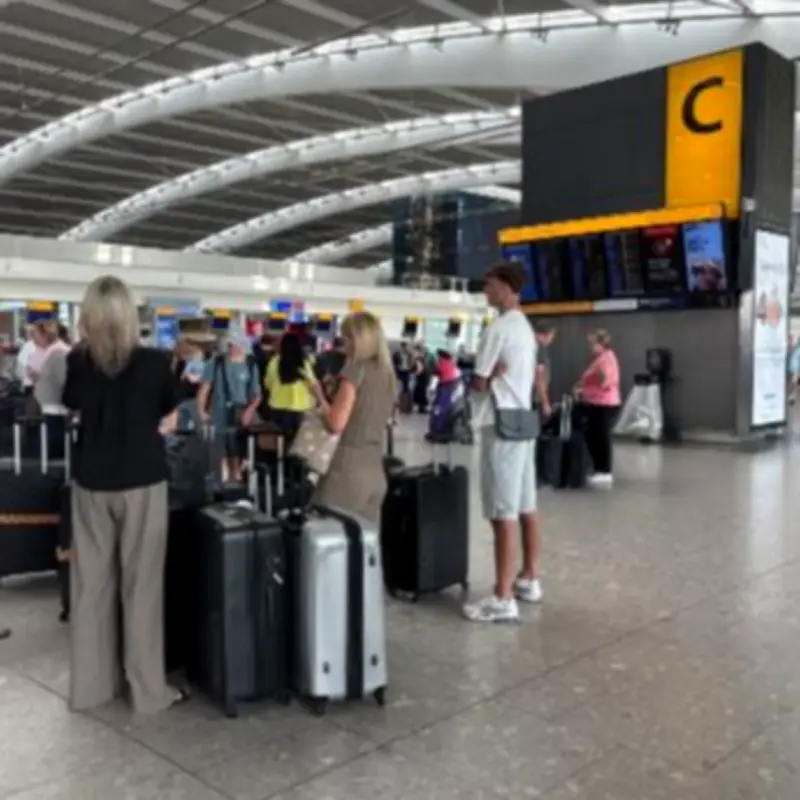
The UK government has issued an update regarding new laws that will affect flights operated by Jet2, Ryanair, TUI, Easyjet, and British Airways. The Labour Party government states that these new regulations are designed to modernise aviation and provide better protection for passengers.
Civil Aviation Bill Announced
The Civil Aviation Bill, which was announced during the King's speech last month, aims to support airspace modernisation and enhance safety standards for passengers across the UK. The government has now released a full press release detailing the rule changes.
Industry Reactions
Tim Alderslade, Chief Executive of Airlines UK, commented: "Air traveller satisfaction is at record highs, proof that airline competition and the UK's dynamic aviation market work. We welcome legislation that helps regulators keep pace with our growing sector — particularly on driving vital airspace modernisation and safety." However, he added: "But new rules must strike the right balance and deliver real consumer benefits; unnecessary burdens help no one. We look forward to shaping this legislation with government as it progresses through Parliament."

Key Changes Outlined
The six key changes included in the bill are:
- Airlines and airports must properly compensate passengers for cancelled flights.
- Airlines and airports must assist disabled people to travel freely by providing an accessible service.
- Airlines and airports must support flyers through disruption, including with food and accommodation.
- Make flights faster for passengers by reducing planes queuing to land.
- Provide correct information regarding flight disruptions.
- Review take-off and landing slots.
Government and Regulatory Statements
Aviation Minister Keir Mather said: "Our new laws will modernise UK aviation, supporting the redesign of our airspace for faster, more efficient flights, while enhancing aviation safety standards and delivering greater passenger protections. We're proud of the strong, reliable experience our sector delivers day-in day-out for passengers and we are clear that no one should be let down when they travel. That's why we are giving the CAA new enforcement powers, including the ability to issue fines on the rare occasion airlines and airports don't meet passenger rights obligations."
Sir Stephen Hillier, Chair of the UK CAA, welcomed the proposals: "We welcome the government's proposals set out in the Civil Aviation Bill to give the UK Civil Aviation Authority more flexible regulatory powers. The ability to make technical safety rules would mean we can more quickly keep the UK aligned with international standards, improve the proportionality of those rules that already exist and better enable the growth of emerging sectors. In turn, this would support safety, growth and innovation in the sector. A wider set of consumer rights enforcement powers would also mean we are better able to give consumers confidence in the sector if their rights are systematically not met." He added: "Alongside the new powers to act, we welcome the new mechanisms to allow Parliament and government to hold us to account for their use. We are already enhancing our processes and governance mechanisms to make sure we can use any new powers as effectively as possible. Deeper sector engagement will be an essential part of this new framework."
Karen Dee, Chief Executive of AirportsUK, said: "Aviation is a UK success story and we look forward to working with the government on this bill, particularly the provisions that will deliver faster, more resilient airspace, enabling this success to continue. This will allow planes to fly better, more fuel efficient routes and reduce the environmental impacts on local communities that live in and around airports."