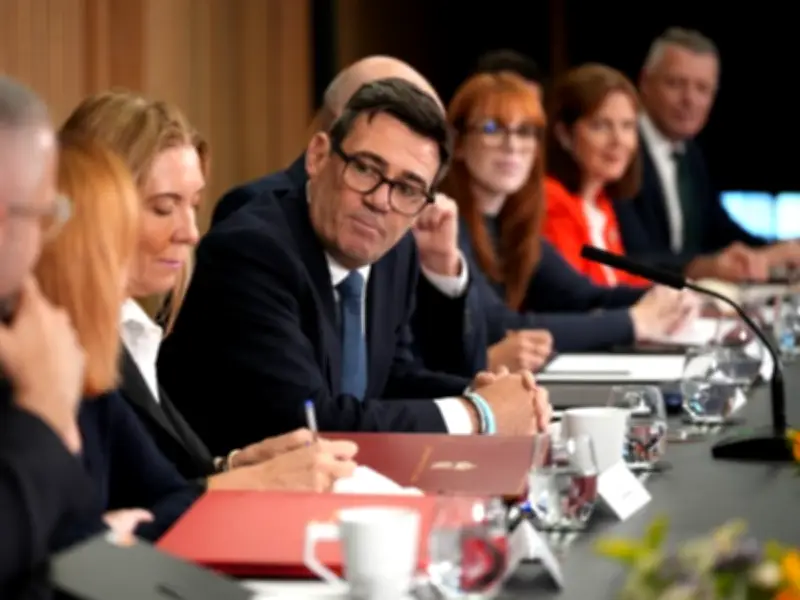
Prime Minister Andy Burnham is advancing a council tax overhaul that could save households in northern England up to £950 a year, as part of a broader push to create a fairer property tax system. The proposed reforms, which include a land value tax or a proportional property tax, aim to address longstanding disparities between regions.
How the Proportional Property Tax Works
Under the model championed by campaign group Fairer Share, council tax and stamp duty would be replaced with a flat 0.48% annual charge on a home's current market value. This system is being explored by the Treasury, according to the i paper, with plans to introduce it firmly on the table. The tax would apply to all properties, regardless of value, but is designed to reduce bills for the majority of households.
Fairer Share claims that around 75% of households across England would be better off under the new system. In areas like Hartlepool, the average saving would be approximately £950 a year, with every household seeing a reduction. The system would also include national redistribution to ensure councils maintain funding for local services.

Regional Fairness and the Northern Disparity
Burnham, the Labour MP for Makerfield, has long argued that council tax, based on 1991 property values, unfairly penalises northern households. In an interview with the BBC's Laura Kuenssberg, he said: "There are people here in Greater Manchester who pay a much higher council tax than people living in much larger homes in London." He called for reform to create fairness, noting that previous chancellor Rachel Reeves had already started the process.
The current eight-band system (A to H) means that a modest home in the North can be in a higher band than a much larger property in London, simply because values have not been reassessed. Burnham wants to end this inequality, warning vested interests that "you can't have it like this anymore."
Political and Fiscal Constraints
Despite the ambitious proposals, Burnham is cautious about the pace of change. He emphasised the need to honour Labour's manifesto and maintain fiscal prudence. "I need to be very prudent when it comes to the public finances," he told the BBC. "I will stick to the fiscal rules." The Prime Minister signalled that any reforms would be introduced gradually, with a focus on fairness without overburdening wealthier households.
Local Impact: Hartlepool as a Case Study
Jonathan Brash, the Labour MP for Hartlepool, highlighted the direct benefits for his constituency. "For Hartlepool, the impact is significant. Under this approach, 100% of households would see their bills fall, with an average saving of around £950 a year. That is real money back into people's pockets at a time when every pound matters," Brash said. He stressed that the system would not cut funding for local services, as redistribution would ensure councils receive necessary revenue.
Critically, the proportional property tax is designed to be revenue-neutral for the government, shifting the burden from lower-value properties to higher-value ones. This aligns with Burnham's goal of making the tax system "right and fair" for northern England.