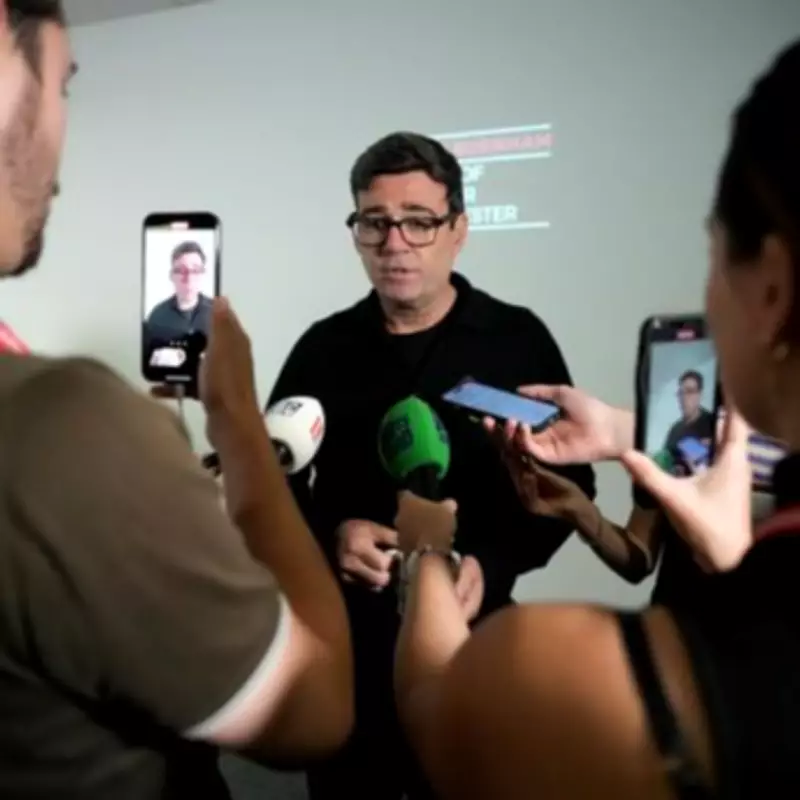
Andy Burnham is one of the frontrunners to replace Sir Keir Starmer if he resigns as the UK's Prime Minister. The Manchester Mayor has previously indicated he would be willing to overthrow the current Labour leader. At last year's Labour Party conference, Mr Burnham called for a 'debate on our direction'. In November, he refused to rule out a challenge, telling BBC Breakfast: 'I don't know what the future will hold.'
As the current Mayor of Manchester, who does not have a seat in Parliament, the route to the top could be strewn with hurdles. It could also be expensive for the taxpayer—the 2024 mayoral election cost Greater Manchester Combined Authority more than £4.7 million. Here are the steps he would have to take before becoming the UK's next prime minister.
Vacant Seat
A vacant parliamentary seat would need to be available—and finding one may not be an easy task. Last November, Clive Lewis, the Labour MP for Norwich South, indicated he would step down for Mr Burnham. He told BBC's Politics Live at the time: 'If I'm going to sit here and say country before party, party before personal ambition, then yes, I have to say yes, don't I?' But Mr Lewis said he will not be standing down for him because Mr Burnham does not want a Norfolk seat. One of Mr Burnham's top backers, Paula Barker, Labour MP for Liverpool, told BBC Breakfast 'no' on Monday when she was asked if she would stand down to make way for him. Marie Rimmer, Labour MP for St Helens South and Whiston, said suggestions she had spoken to Mr Burnham about giving up her seat were 'absolute nonsense'. In a post on X, formerly known as Twitter, she said: 'I have a great deal of respect for Andy, he has done some incredible work in Manchester, but I am not planning to stand down for him or for anybody else.' There are two by-elections coming up in Scotland, after both SNP Westminster leader Stephen Flynn (Aberdeen South) and SNP MP Stephen Gethins (Arbroath and Broughty Ferry) were elected to Holyrood. Mr Burnham is unlikely to stand in either of these Scottish seats.
Labour's Ruling National Executive Committee
If a seat were to become vacant, Mr Burnham would need to win over the National Executive Committee (NEC)—responsible for choosing Labour's candidates. In January, the NEC blocked Mr Burnham from running in Gorton and Denton. A 10-strong group, including the Prime Minister, voted to deny Mr Burnham permission to stand in the Greater Manchester by-election. Sir Keir justified the move arguing 'an election for the Mayor of Manchester when it's not necessary would divert our resources away from the elections that we must have'. The Prime Minister faced criticism over this decision, particularly after Green Party MP Hannah Spencer came out on top in the competition. Labour deputy leader Lucy Powell, the only member of the NEC to vote in favour of allowing Mr Burnham to stand, said he 'probably would have' held the seat.
Leadership Ballot
If Mr Burnham were to be elected to Parliament, only then could he make a Labour leadership bid. According to the Labour Party rule book, candidates seeking to enter the ballot must be an MP. This is because the Labour leader is the Prime Minister, therefore they would need to be a Member of Parliament. The current rules state a candidate must receive nominations from 20 per cent of their Labour colleagues in Parliament to be in the running. They must also receive nominations from 5 per cent of constituency Labour Parties (CLPs), or at least three affiliates of the party, with at least two being trade unions.
Summary of Necessary Steps
So, for Mr Burnham to oust Sir Keir and become the next Prime Minister, he will need to take these steps:
- Vacant seat
- NEC permission
- Win election, become an MP
- Meet nominations threshold
- Win leadership competition, become Labour leader and prime minister