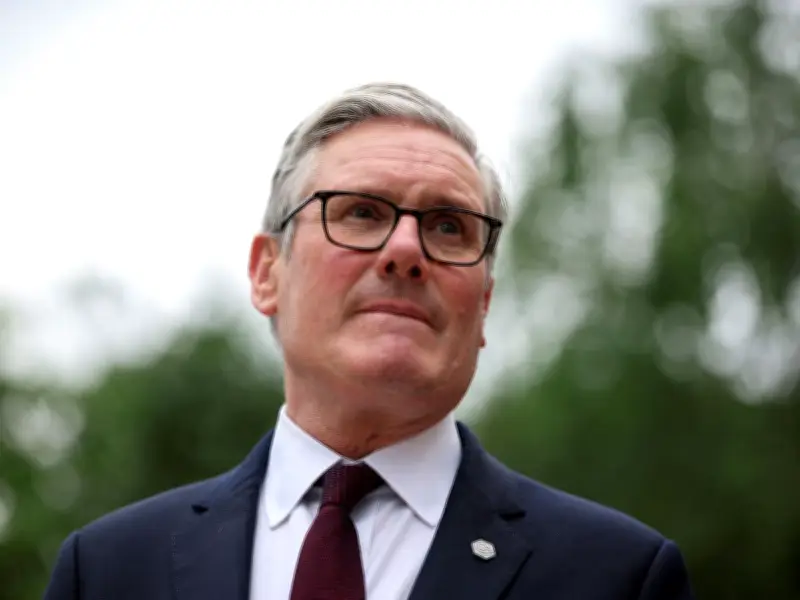
Sir Keir Starmer has announced he will resign as Prime Minister of the United Kingdom and step down as leader of the Labour Party. He stepped out of Number 10 to thunderous applause, before saying how proud he is of what the party has achieved since they took the reins from the Conservatives.
Starmer's Achievements and Legacy
Starmer said he rebuilt the Labour Party and ripped out "the poison of antisemitism." He added: "Look at what we have achieved in just two years," speaking about economic and wage growth across the country.
He said: “Six years ago I inherited a Labour Party that was politically, financially and morally bankrupt. I was told time and time again that my party was finished. That we were consigned to history. That a majority at the general election let alone a landslide majority was impossible. But we proved those people wrong. Because we changed our party. Ripping out the poison of anti-Semitism, restoring trust on the economy, defence and national security and becoming a party that once again stood proudly with not against our national flag.”
Resignation Timeline and Process
Starmer has spoken to His Majesty the King to confirm his resignation on July 9. He confirmed a new Labour leader and Prime Minister will be in place by September. Starmer continued: “Every decision I have taken has been about putting the country I love first. That is why I will resign as leader of the Labour Party. I have spoken to His Majesty the King this morning to inform him of my decision. I will ask the National Executive Committee of the Labour Party with nominations opening on July 9 and completed by the summer recess. In the case of a contest, this will ensure a new leader is in place before Parliament returns in September. I will remain in post as Prime Minister until the contest is complete and I will do everything I can to ensure an orderly handover of power.”
Party and Public Reaction
Starmer acknowledged the party's internal dynamics: “I know the question being asked of us now is not who was best-placed to change the Labour Party to take us into power and to begin the vital work of improving lives for millions of people. Those questions have been answered. The question my party is asking now is whether I am best placed to lead us into the next general election. I have heard the answer of my parliamentary party loud and clear and I accept that answer with good grace.”
The announcement marks the end of a transformative period for the Labour Party, which under Starmer's leadership secured a landslide majority in the 2024 general election, ending 14 years of Conservative rule. His resignation triggers a leadership contest that will shape the party's future direction.