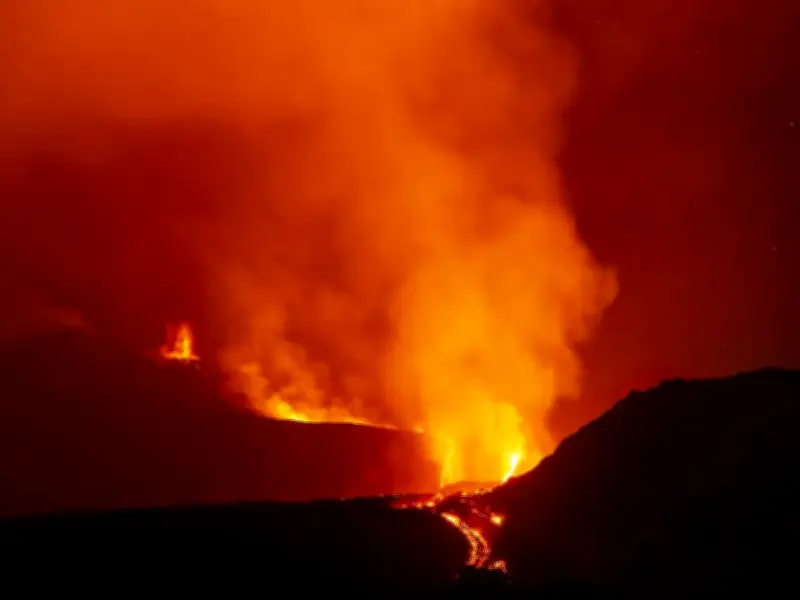
Mount Etna, Europe's highest active volcano, has erupted again, sending ash and lava skyward and causing significant flight disruption at Catania Airport, a key gateway for British tourists to Sicily. Incoming flights were grounded on Monday, August 10, with restrictions extended as volcanic ash continues to blanket the airspace, according to The Express.
Eruption Details and Impact
The ongoing eruption is characterized by explosive activity at the Voragine summit crater, with volcanic bombs ejected in the upper peak area and heavy ash plumes rising above the Sicilian landscape. Glowing lava has been observed pouring from the volcano, while an enormous column of dark smoke and ash has billowed over the region, reports the Daily Record.
Catania International Airport, which handles millions of passengers annually and serves as a principal gateway to eastern Sicily, has faced repeated disruptions over recent days. The National Institute of Geophysics and Volcanology's Etna Observatory has issued aviation warnings, raising the volcanic alert to its highest level, indicating that an eruption producing substantial ash emissions is underway or imminent.
Why Volcanic Ash Is Dangerous
Volcanic ash poses a particular hazard to aircraft, as it can be drawn into engines and damage vital components. This can lead to flight delays, rerouting, or cancellations when ash clouds threaten flight corridors. Passenger reports already highlight the chaos, with some travellers facing cancelled or diverted flights as operations at Catania Airport were disrupted.
The recent eruption follows similar activity in July 2026, when volcanic ash also caused considerable disruption to flights in and out of Catania. The volcano's persistent eruptions have sparked frustration among some local tourist guides, who depend on escorting visitors up the mountain to witness its spectacular lava displays.
Impact on Tourists and Advice
Despite the upheaval, Mount Etna remains a major draw for visitors to Sicily, with its eruptions regularly attracting tourists eager to witness the glowing lava and towering ash plumes. Passengers due to travel to or from Catania are advised to check directly with their airline for the most up-to-date information, as volcanic activity and ash conditions can shift rapidly.
The eruption has affected British tourists, many of whom flock to Sicily each year. Catania Airport has previously been forced to suspend flights during eruptions when volcanic ash has posed a threat to aviation. The current situation underscores the ongoing challenges posed by one of the world's most active volcanoes.