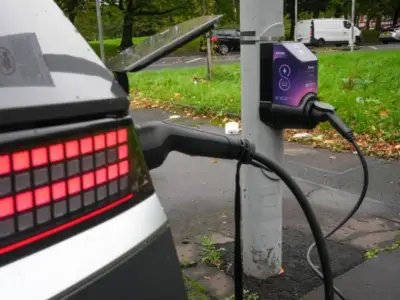
Rachel Reeves has confirmed a new pay-per-mile car tax system that will charge electric vehicle (EV) owners 3p per mile, resulting in an annual fee of £222 for drivers covering the average 7,400 miles. The announcement comes as Reeves is expected to step down as Labour Party Chancellor.
New Tax Details and Timeline
The charge, officially named electric Vehicle Excise Duty (eVED), will take effect from April 2028. Hybrid vehicles will be charged at a lower rate of 1.5p per mile. The system is designed to compensate for the declining revenue from fuel duty as more drivers switch to electric vehicles.
The Treasury stated: "At Autumn Budget 2025, the government announced the introduction of electric Vehicle Excise Duty (eVED), a new mileage charge on electric vehicles (EV) and plug-in hybrid vehicles (PHEV), which will take effect from April 2028."
Rationale Behind the Charge
The Treasury added: "Given all cars cause congestion and wear and tear on the roads, eVED has been designed to ensure EV and PHEV drivers make a fair contribution to the public finances as fuel duty revenues decline, while continuing to pay less than the equivalent fuel duty paid by petrol and diesel vehicles."
This means EV drivers will still pay less than their petrol and diesel counterparts, but the new tax aims to address the fiscal gap created by the transition to electric mobility.
Public Reaction and Concerns
The announcement has sparked debate among motorists. Fred Hendon commented: "VED and fuel tax is effectively flat rate plus a cost per mile. eVED plus a mileage rate is no different but..... the issue is how will it be monitored?" He raised concerns about the proposed monitoring method: "Civil servants advising have gone for the simplistic version - miles accumulated at MOT, no ifs and no buts. Charging to use one's car abroad is manifestly wrong. Renting a car on the other side might be cheaper."
Another driver added: "Did EV owners seriously think they'd never pay any tax whilst new ICE owners paying tax numbers dwindled in numbers? Unfortunately somebody has to pay the road tax whether it's ICE or EV owners."
Implementation and Future Outlook
The new system will rely on mileage readings taken during annual MOT tests to calculate the charge. This approach has been criticized for not accounting for miles driven outside the UK, but the Treasury maintains it is the simplest and most cost-effective method.
As Reeves prepares to leave her position, the long-term impact of this policy remains to be seen. The change marks a significant shift in motoring taxation, moving from a flat-rate system to one based on actual road usage.