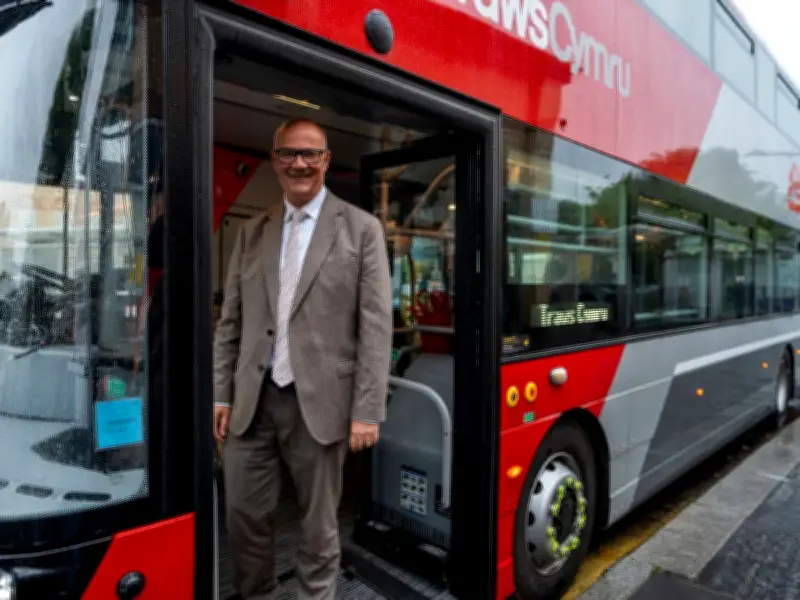
Transport for Wales (TfW) has invested in 30 new buses for its TrawsCymru long-distance network, part of a £15.3m procurement of 61 vehicles in the 2025/26 financial year. TrawsCymru, which spans 13 routes across Wales and was established in 2012 to connect communities with limited rail links, now operates a fleet of 54 buses.
New Buses and Franchising Model
Some of the new buses are already in operation, with the majority expected to enter service next month. The investment follows recent legislation that enables TfW to plan bus services across Wales through a franchising model, where operators bid for contracts on route bundles aligned with rail services. The first franchises will be awarded in south-west Wales next year, with the full Wales franchise model scheduled for completion in north Wales by 2030.
Broader Investment and Impact
Around three-quarters of public transport journeys in Wales are made by bus. The 61 new vehicles also include buses for Fflecsi on-demand services and for Powys as part of the mid Wales 'bridge to franchising' programme, where TfW supports local authorities in recontracting services.
Deputy Transport Minister Mark Hooper stated: "Transport plays a key role in supporting economic growth by helping people access work, education, and other services. Simplified fares, more frequent services, connectivity with other bus services, and newer vehicles are all part of this service. I am really excited to be building on Wales' existing transport connections with a fleet of new, modern, accessible vehicles designed for comfort and sustainability."
Lee Robinson, TfW's executive director for regional transport and integration, added: "TrawsCymru services are vital for communities across Wales, and we're pleased to introduce these new buses to the network. They will deliver more comfortable, higher-quality journeys for our customers, while supporting a shift from private car use to public transport. Crucially, they will also help strengthen access to essential services, including healthcare, education, leisure, and employment."
Earlier this year, TfW chief executive James Price described bus franchising as "a once-in-a-generation chance to build a bus network that truly reflects the needs of Wales; urban and rural, coast and countryside, young and old, and a network that's reliable, affordable, flexible, and easy to use." He emphasised that buses, trains, trams, active travel routes, and cars should "come together not in competition, but coherently as one."