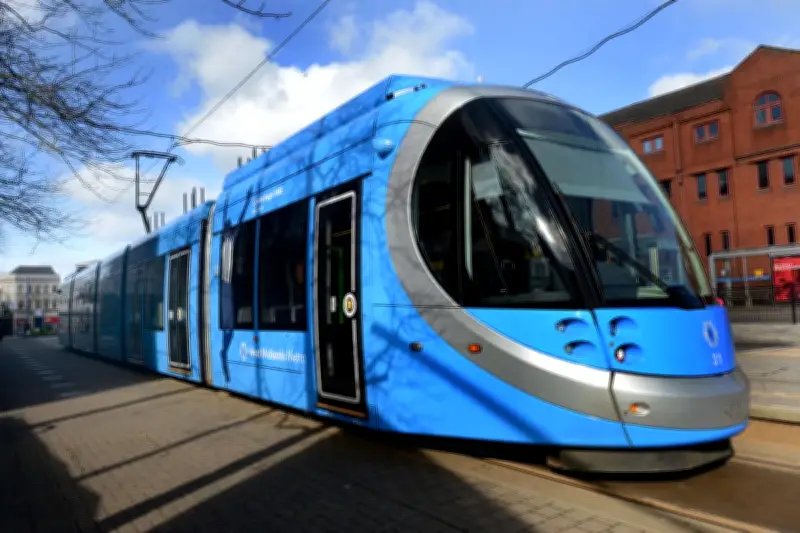
Tram services in Wolverhampton were severely disrupted on Tuesday after a malfunction of traffic lights at a critical junction brought operations to a near standstill. The failure, which occurred at the intersection of Bilston Street and Cleveland Road, caused significant delays and cancellations on the Wolverhampton to Birmingham line.
Extent of the Disruption
The fault led to trams being held at stations for extended periods as drivers were unable to safely navigate the junction without working signals. Services were reduced to a 30-minute frequency, with some journeys canceled entirely. Passengers reported waits of over an hour at busy stops, including Wolverhampton St George's and Priestfield.
West Midlands Metro engineers were dispatched to the site and worked to restore the lights manually. However, the repair process took more than two hours, compounding the disruption during the evening peak period. Transport officials advised commuters to seek alternative routes, including bus services, which also experienced knock-on delays due to increased traffic.
Cause and Response
Initial investigations suggested a power surge had damaged the traffic light controller, though a full assessment was ongoing. A spokesperson for the local transport authority said: "We apologize for the inconvenience caused by this unforeseen technical fault. Our teams worked as quickly as possible to restore normal service, but we understand the frustration of passengers."
The disruption occurred on a day when the tram network was already operating at reduced capacity due to planned maintenance on other sections. This combination of factors led to overcrowding on replacement buses and taxis, with many passengers complaining about lack of information at stops.
Impact on Commuters
Regular commuter Sarah Jones, who travels daily from Wolverhampton to Birmingham, described the situation as "chaotic." She said: "There were no announcements, no staff to help, and the app wasn't updating. I eventually took a taxi, but it cost me a fortune." The incident highlighted ongoing concerns about the resilience of the city's transport infrastructure, particularly at key junctions that serve both trams and road traffic.
West Midlands Metro has pledged to review the maintenance protocols for traffic light interfaces to prevent similar failures in the future. Meanwhile, all services resumed normal operation by late evening, with the traffic lights fully repaired and tested.
Broader Network Issues
This is not the first time tram services in the region have been affected by traffic light problems. In March, a similar fault at a junction in Wednesbury caused delays for over three hours. Transport campaigners have called for investment in backup systems or alternative signaling solutions that are less vulnerable to power fluctuations.
The disruption also affected local businesses, with some reporting reduced foot traffic during the evening hours. A café owner near the tram stop said: "We rely on commuters stopping by on their way home. Today, many just went straight past or didn't come at all."
As the city continues to expand its tram network, ensuring reliability at critical infrastructure points remains a priority for both the transport authority and the local council.