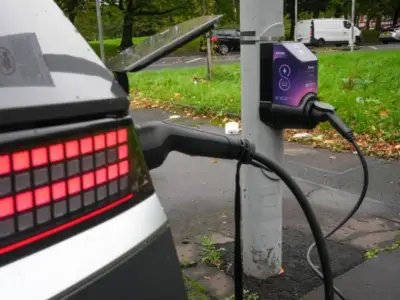
The Department for Transport has confirmed that households with driveways no longer need planning permission to install electric vehicle (EV) chargers. The rule change, introduced under the previous administration led by Sir Keir Starmer, is now in force across the UK, cutting red tape for drivers and businesses alike.
The change means that installing an EV chargepoint no longer requires planning permission, simplifying the process for homeowners. The policy was introduced under Starmer, who has since been succeeded by Andy Burnham, the Labour Party MP for Makerfield, as Prime Minister.
Government cuts red tape to accelerate EV adoption
MP Lilian Greenwood said: "We're cutting down on paperwork to power up the EV revolution so that drivers, businesses and those looking to make the switch will have more chargepoints to power from and less red tape to deal with."
Greenwood added: "We continue to make the switch to EVs easier, cheaper and better by investing over £2.3 billion to support drivers and back British carmakers through international trade deals, creating jobs, boosting investment and securing our future."
The removal of planning permission requirements also extends to essential electrical infrastructure, such as substations, across the majority of sites. Lewis Gardiner, operations director at Osprey Charging Network, said: "Removing the need for planning permission for essential electrical infrastructure like substations across the majority of sites will save months of delays, reduce costs and accelerate the delivery of the rapid charging hubs drivers need."
Benefits of EVs highlighted by government
The government has said that the benefits of EVs are clear for drivers. Running an EV can cost as little as 2 pence per mile, and EVs are constantly becoming cheaper, with 2 in 5 used EVs now under £20,000 and 29 brand new models priced under £30,000. Most new EVs also have a range of nearly 300 miles – enough to get from London to Newcastle on one charge.
Patrick Dunne, Sainsbury’s Chief Property and Procurement Officer and MD of Smart Charge, said: "Everyone at Smart Charge knows how important it is to make EV charging simple, reliable and accessible – both to make transport cleaner and to ensure we’re meeting the everyday needs of drivers throughout the UK."
Dunne added: "We welcome this new streamlined approach to installing charge points, which will help accelerate the nation’s adoption of EVs."
Industry leaders welcome streamlined approach
The policy change has been welcomed by industry figures. Jack Cousens, AA head of roads policy, said: "The crucial element is ensuring grid connection in a timely manner. This is especially important in rural locations and areas where there is no dedicated off-street parking."
Delvin Lane, chief executive of charger company InstaVolt, said: "Anything that helps remove barriers to EV adoption and gives all drivers confidence in the infrastructure – helping remove range anxiety – is a strong move in the right direction."
The removal of planning permission for EV chargers is part of a broader effort to streamline the installation of charging infrastructure across the country, reducing delays and costs for drivers and businesses. The change is expected to accelerate the delivery of rapid charging hubs and support the UK's transition to electric vehicles.