In the United Kingdom, wearing a seat belt in a moving vehicle is a legal requirement if one is fitted in the seat you occupy. Alongside this, only one person is permitted in each seat equipped with a seat belt, reports MirrorOnline. You must also ensure that any children travelling in your vehicle are secured in the appropriate car seat for their height or weight until they reach 135 centimetres tall or turn 12, whichever comes first.
Penalties for Non-Compliance
Failing to wear a seat belt when required can lead to a fine of up to £500. If you are behind the wheel and a child under 14 is found not to be in the correct car seat or wearing a seat belt while you are driving, you face penalties. Children aged 14 and over, and adults, are responsible for their own seat belts and can face a fine if discovered not wearing one.
Full List of Exemptions
There are several exemptions to the seat belt requirement. The following individuals are not legally required to wear a seat belt:
- A person who holds a medical certificate stating that, on medical grounds, wearing a seatbelt is inadvisable (including during pregnancy).
- Drivers of vehicles carrying out manoeuvres that involve reversing (three-point turn). This includes a qualified driver supervising a learner driver performing reversing manoeuvres.
- The driver of or a passenger in a goods vehicle on a journey of no more than 50 metres undertaken for delivering or collecting anything.
- A disabled person wearing a disabled person's belt.
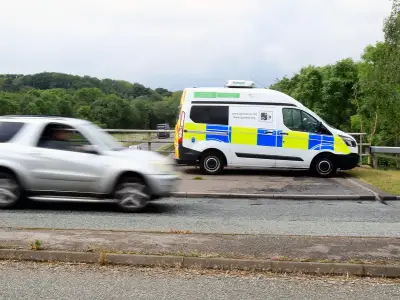
- A person driving or riding in a vehicle for fire brigade or police purposes, or for transporting a person in lawful custody, including the detained individual themselves.
- The driver of a licensed taxi while seeking hire, responding to a call for hire, or carrying a passenger for hire.
- A private hire vehicle while being used to transport a passenger for hire.
- A person driving a vehicle under a trade licence while investigating or rectifying a mechanical fault with the vehicle.
- A person taking part in a procession organised by or on behalf of the Crown, one that is commonly or customarily held, or a procession for which a notice under section 11 of the Public Order Act 1986 has been issued.
- A person conducting a driving competence test where wearing a seatbelt would put themselves or any other person at risk.
- A person driving a vehicle where the driver's seat is not fitted with an adult belt.
- A person riding in the front of a vehicle where no adult belt is available for them in the front.
- A person riding in the rear of a vehicle if no adult belt is available for them in the rear.
- A person travelling in a small or large bus being used to provide a local service in a built-up area (where the entire route consists of restricted roads).
- A person travelling in a small or large bus built or adapted for the carriage of standing passengers and on which the operator permits standing.
- A person riding in an ambulance while providing medical attention or treatment to a patient which, due to its nature or the patient's medical condition, cannot be delayed.
Understanding these exemptions can help drivers and passengers stay informed and avoid unnecessary fines. Always ensure compliance with seat belt laws to promote safety on the roads.