West Midlands Road Network in Critical Condition with £1.94 Billion Repair Backlog
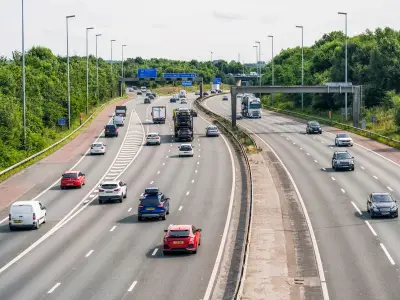
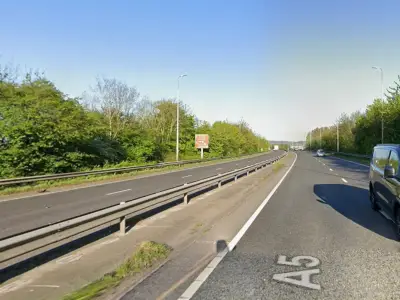
A damning new report has exposed the severe state of disrepair across West Midlands roads, revealing a staggering £1.94 billion backlog for essential carriageway repairs. The Annual Local Authority Road Maintenance (ALARM) survey for 2026 paints a bleak picture of crumbling infrastructure that affects thousands of drivers daily.
Alarming Statistics Highlight Road Network Decline
According to the comprehensive survey, only 46 percent of the entire West Midlands road network currently meets the standard for 'good structural condition'. This means more than half of the region's roads are in various states of deterioration, with many approaching critical failure points.
The data reveals particularly concerning figures about the remaining lifespan of local roads. More than one in seven roads across the region - equivalent to over 3,000 miles of carriageway - now have less than five years of structural life remaining. Even more dramatically, 54 percent of the network, representing almost 11,000 miles of roads, has less than 15 years of life left before requiring major reconstruction.
Massive Financial Shortfall Despite Increased Funding
Local authorities in the West Midlands needed an additional £117 million last year alone just to maintain their road networks to their own target conditions and prevent further rapid decline. The £1.94 billion figure represents what would be required to bring the entire regional network up to what highway engineers describe as 'ideal' conditions.
Over the past year, maintenance crews filled an astonishing 231,478 individual potholes across the region at a total cost of £18.2 million. Despite overall highway maintenance budgets in England and Wales increasing by 17 percent for the 2025/26 period to an average of £30.5 million per authority, the report indicates this additional funding has yet to translate into noticeable improvements for road users.
Industry Leaders Voice Grave Concerns
David Giles, chair of the Asphalt Industry Alliance which commissions the annual ALARM report, expressed strong criticism of the current situation. "I think all road users would agree that the condition of our local roads has become a national disgrace," he stated bluntly.
Giles elaborated on the long-term trends, noting that "tracking ALARM data over the last decade shows the amount needed to bring local roads up to scratch has increased dramatically, and the impact of frequent adverse weather events on a consistently underfunded - and increasingly fragile - network are coming home to roost."
AA president Edmund King OBE echoed these concerns, describing the report as a "stark warning" about the scale of work needed to "eradicate this plague of potholes." He added that drivers have been "seeing with our own eyes, and feeling with our wheels, how record wet weather linked to substandard roads has led to many local roads becoming patchwork obstacle courses."
Cautious Optimism Tempered by Realistic Timelines
While acknowledging increased government funding, Giles offered a sobering perspective on the timeline for improvements. "Local authority highway engineers have told us they are cautiously optimistic that the increased funding announced by the Government, supplemented by their own coffers, should help them stem further decline, but it is not the silver bullet that will enable them to clear the backlog of repairs any time soon," he explained.
The AIA chair emphasized that "it will be some time before the impact of increased funding levels, if fully delivered, will be noticed by the public." He suggested that progress could accelerate if the government's commitment to additional funding was "frontloaded, rather than ramping up in the years to 2030."
Such an approach, Giles argued, would "support a shift away from the seemingly endless cycle of pothole patch and repair and allow local authority highway teams to sooner deliver necessary resurfacing and proactive programmes that prevent potholes forming in the first place to improve the experience of all road users."
The full ALARM survey report detailing these findings was published on March 17, 2026, providing the most comprehensive current assessment of road conditions across the West Midlands region and highlighting the enormous challenges facing transportation infrastructure in the coming years.