A recent decision by Prime Minister Andy Burnham to slash VAT on household electricity bills will lower the cost of charging electric vehicles (EVs) at home. However, the move risks deepening the inequality between EV owners with driveways and those without, who rely on public charging networks and face significantly higher prices per mile.
The VAT Cut and Its Impact on Home Charging
The VAT reduction applies to domestic energy bills, directly lowering the cost for homeowners who have a private chargepoint installed. For high-mileage EV drivers, this could lead to savings of approximately £40, according to David Martell, CEO of home wallbox provider Andersen. “That may not sound transformational on its own,” Martell acknowledged, “but it's the direction of travel that matters.”
Gurjeet Grewal, chief of Octopus Electric Vehicles, welcomed the change, stating that “the financial case for going electric has never been stronger.” On BBC Radio 4's Today programme, Transport Secretary Heidi Alexander described the VAT cut, alongside a national cap on bus fares, as a “signal of intent for the Burnham government.”
The Public Charging Cost Disparity
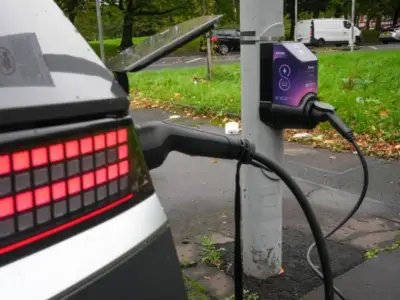
While home charging becomes cheaper, those without driveways who park on the street must rely on public charge points. According to EDF, the UK currently has 73,334 public EV charging devices, with 14,448 offering rapid charging at 50kW or above. Recent reports suggest the total has now surpassed 75,000. Charging fees vary by network, but average pay-as-you-go prices are approximately 53p per kilowatt-hour (kWh) for slow/fast chargers, equating to about 16p per mile. For rapid and ultra-rapid chargers, the cost is roughly 81p per kWh, or 24p per mile—substantially higher than home charging rates.
Victoria Edmonds, CEO of campaign group EVA England, stressed that the EV transition “cannot be fair while people pay substantially more simply because they cannot charge at home.” She highlighted the “significant taxes, levies and electricity costs faced by charge point operators” as key barriers to reducing public charging costs.
Industry and Academic Calls for Action
Although the automotive industry broadly welcomed the VAT cut, many have urged the government to address the disparity for non-home chargers. Professor David Bailey of Birmingham Business School described VAT on public charging as a “tax on circumstance” and called for an end to the “EV charging tax divide once and for all.”
Without intervention, the current policy risks creating a two-tier system where EV ownership remains more affordable for those with private off-street parking, while others face a significant financial penalty for using public infrastructure. The ongoing expansion of public charging networks and potential future adjustments to taxation may help bridge this gap, but for now, the divide remains stark.