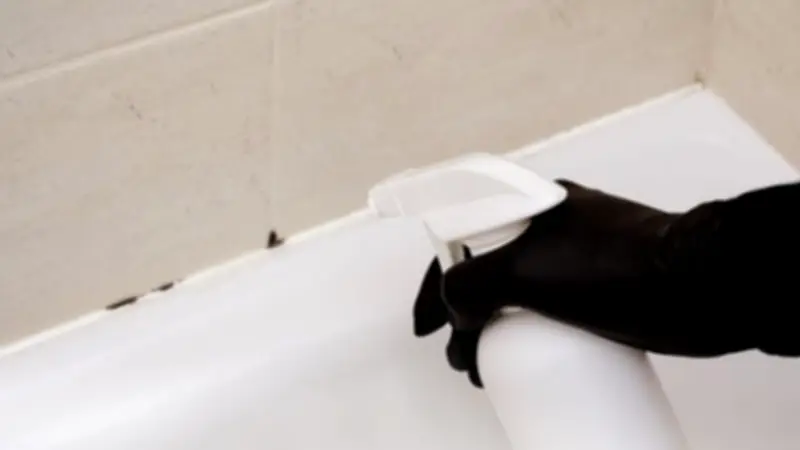
Homeowners struggling with stubborn bathroom mould may find an effective solution in a common kitchen ingredient, according to an expert. The rubber-like silicone sealant around showers and baths is designed to prevent water leakage, but its porous nature and constant exposure to moisture make it a prime breeding ground for mould if not cleaned regularly.
While many people instinctively use bleach to tackle mould, experts warn it is not the right tool for the job. Bleach only treats the surface and cannot penetrate deeply enough to kill the spores lodged within the sealant. Instead, handyman Terry Alexander, founder of The Plumbero, says white vinegar can be a more effective solution because it breaks down mould at its source. “White vinegar is a natural and effective mould remover due to its acidic properties,” he explained.
Why white vinegar works
White vinegar contains acetic acid, which dissolves mould spores without the need for harsh chemicals. It is gentle enough to use on silicone sealant without causing damage or discolouration, yet capable of reaching deeper into the material to eliminate mould at its root.
How to use white vinegar for mould removal
To apply this method, generously apply white vinegar directly onto the affected areas of the sealant. Let it sit for at least an hour to allow the acid to work on the mould. For tougher cases, leaving it overnight can produce better results. However, users should ventilate the room due to the strong smell.
Once the vinegar has had time to act, scrub the mould away using a brush or an old toothbrush. Rinse the sealant thoroughly with warm water and dry it completely to help prevent mould from returning.
Preventative tips
Experts say regular cleaning with white vinegar can stop mould from building up in the first place. For an even stronger solution, combine it with baking soda and tea tree oil to boost its cleaning power and keep bathrooms fresher for longer.