Eid ul Fitr 2026 Date Officially Declared for North America
The Fiqh Council of North America has made a significant announcement regarding the date of Eid ul Fitr 2026, setting it for Friday, March 20. This declaration is based on advanced astronomical calculations predicting the visibility of the crescent moon, which marks the end of Ramadan and the beginning of the Shawwal month.
Astronomical Basis for the Decision
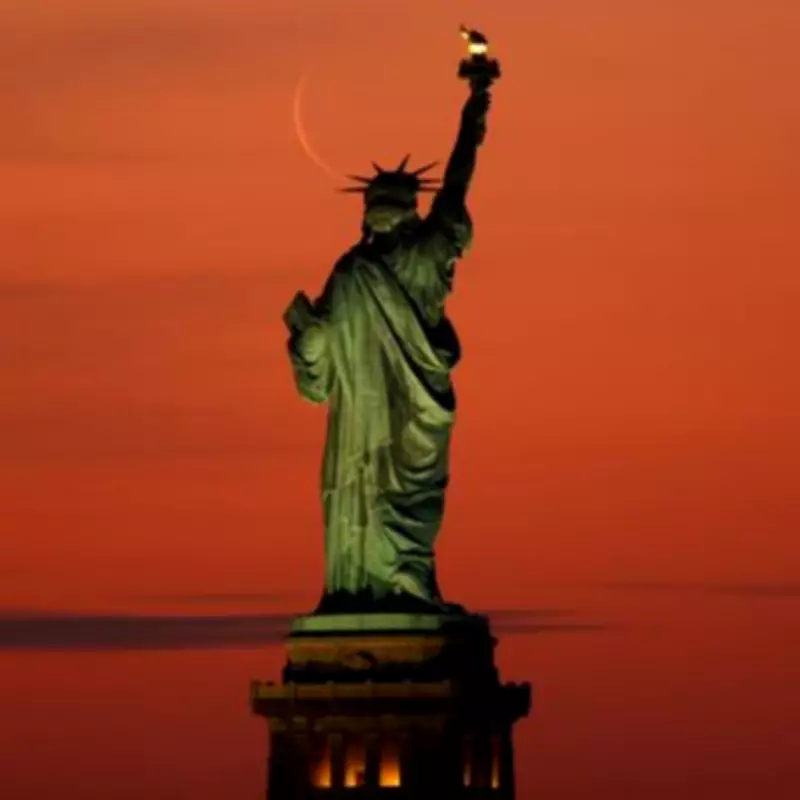
The council's ruling stems from the new moon being born on Thursday, March 19, 2026, at 1:23 Universal Time. According to their analysis, the first faint crescent will be visible across much of North America later that day. Key criteria used include:
- An elongation of at least 8 degrees between the moon and sun.
- The moon positioned at least 5 degrees above the horizon at sunset.
These conditions, established by Dr. Yusuf Al-Qaradawi of the European Council for Fatwa and Research, ensure that the moon is above the horizon and observable somewhere on the globe. The FCNA confirmed that these parameters are met throughout North America, leading to the start of Shawwal on March 20.

Visibility Across the Continent
Astronomers from the Royal Observatory in Greenwich, London, support the council's findings, noting that easy sightings with the naked eye should be possible from most of North America on March 19. Specific details include:
- New York and Los Angeles: Calculations confirm easy visibility on both the east and west coasts.
- Central America: Clear skies will allow for moon sightings without optical aids.
- Northern South America: Telescopes may be necessary for observation.
- Southern South America: The moon is not expected to be visible until the following day.
Despite this announcement, the date could still vary as other Islamic organizations in America may issue their own rulings based on local moon sightings.
Implications and Broader Context
The FCNA recognizes astronomical calculation as an acceptable method for determining lunar months, including Ramadan and Shawwal. This approach provides clarity for millions of Muslims planning their Eid celebrations, which involve prayers, feasting, and community gatherings. The declaration helps coordinate festivities across North America, though individual communities might adjust based on additional observations.