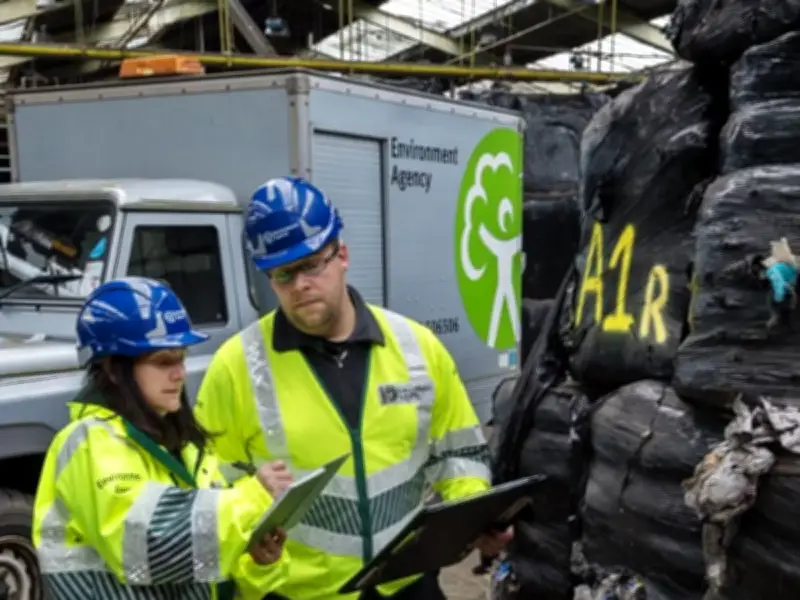
The Environment Agency is deploying 'sniff testing' to monitor a landfill site in Calne, Wiltshire, after thousands of residents complained of a persistent 'rotten egg' stench. The odour, emanating from the Hills Waste landfill site at Lower Compton, has plagued the town for a year, with locals reporting breathing difficulties and headaches.
Complaints have surged in the last week, with over 100 reports made last weekend alone, according to the Environment Agency (EA). In 2025, the EA confirmed the Lower Compton site as the likely source and served Hills with an enforcement notice requiring a programme of landfill capping to reduce gas escapes.
Monitoring Methods and Compliance
The EA is primarily using 'sniff testing'—officers detecting and assessing odours with their noses—to determine if Hills is complying with permit conditions. 'This is required by permit conditions and remains the most effective method, as the human nose can detect the full range of gases responsible for odour at very low levels,' the EA said in a statement. 'It is important to be clear that this type of monitoring is for regulatory compliance purposes and not to directly assess health impacts.'
Additionally, the EA is using a mobile monitoring facility to measure air quality, including methane, hydrogen sulphide (a toxic gas), and particulates. Data is being shared with the UK Health Security Agency (UKHSA) for independent analysis.
Health Concerns and Official Response
'We understand that residents have concerns about potential health effects, and we take these concerns seriously,' the EA added. 'We use sniff testing to assess odour impact and compliance with permit conditions, and we use monitoring data to support this and to inform UKHSA’s independent health assessment. Our aim is to ensure that odour is reduced to a level where it is no longer causing unacceptable impact beyond the site boundary.'
A spokesperson for Hills Waste said: 'Soil-capping works are ahead of schedule and in line with our landfill action plan as agreed with the Environment Agency.'
Health Risk Assessment
UKHSA, the independent public health body, reviews monitoring data to assess potential health impacts. In May, UKHSA told Business Live that with current hydrogen sulphide levels, the health risk is 'likely to be low'. Lucy McCann, consultant in health protection at UKHSA South West, explained: 'Everyone reacts to odours differently, and some people are more sensitive to environmental odours than others. Landfill gas contains hydrogen sulphide, which even in very small quantities produces a strong smell similar to rotten eggs. This gas can seep into the surrounding air and could be noticeable to nearby residents.'
'Whether an odour poses a health risk depends on the concentration of a substance in the air, how frequently a person is exposed to it, and how long that exposure lasts. Certain groups may be more sensitive to the effects of environmental odours, including people with respiratory conditions such as asthma or COPD, pregnant women, children and older adults.'
Ms McCann noted that odour and health impacts are assessed differently: 'The human nose is very sensitive to smell and can detect gases such as this even in very small amounts, well below what would be directly harmful to health. Some people may experience physical symptoms such as nausea, headaches, or dizziness as a reaction to strong odours, and as concentration levels increase, more people are likely to experience symptoms.'
Wiltshire Council’s Environmental Health team is also monitoring the odour for 'statutory nuisance and public health' purposes, according to Business Live.