Kings Heath LTN Scheme Faces Major Setback Amid Child Safety Concerns
A Birmingham mother has issued a stark warning that children's lives are being put at risk following a significant setback to the controversial Kings Heath Low Traffic Neighbourhood scheme. Katie Day, representing a local parents group, has called for the immediate resignation of the city council's transport boss after learning that the project's second phase requires substantial revision.
"Catastrophic Failure of Leadership" Alleged
Katie Day, from a school parents group in the Kings Heath area, has described the current situation as a "live child safeguarding emergency." She reports that residential streets are plagued by severe congestion, dangerous driving behaviors, and even physical altercations between frustrated motorists.
"Every morning on our streets we are witnessing road rage fist-fights, gridlock, and frustrated drivers routinely mounting the pavements right outside the three schools within this small residential area," Day told the Local Democracy Reporting Service. "This is no longer just a debate about traffic; it is a live child safeguarding emergency."
Day emphasized that the residential roads were never designed to accommodate the current volume of approximately 8,000 vehicles daily. She characterized the need to restart planning after years of work as "a catastrophic failure of leadership" and directly blamed bureaucratic delays for putting children's lives at risk.
Scheme Revision Required
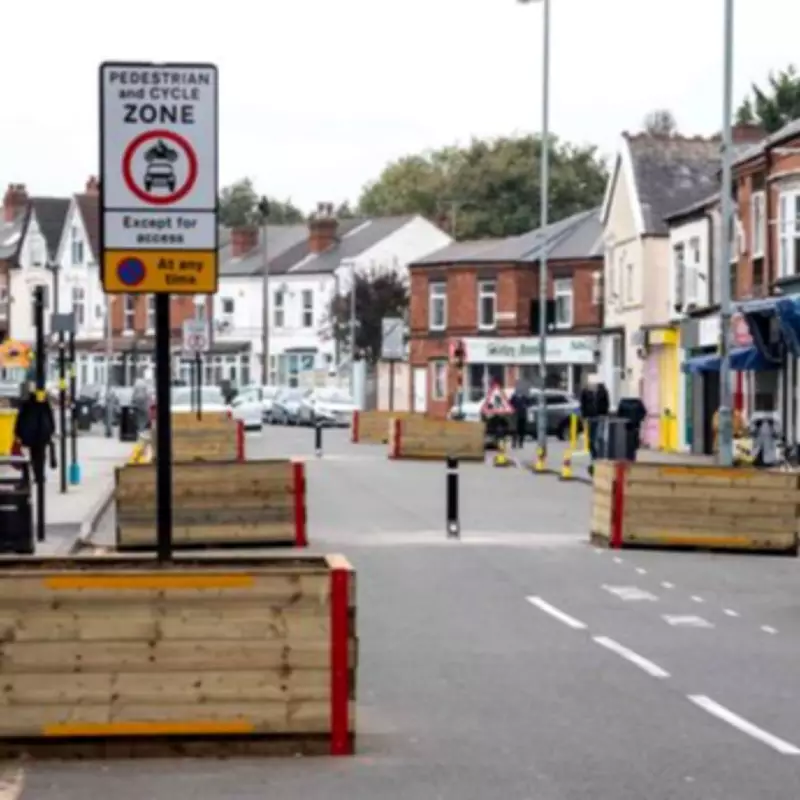
The Birmingham City Council recently announced that proposals for the second phase of the Kings Heath LTN scheme need to be "revised" and that "further work" is necessary before progressing. This development comes after the implementation of initial measures including modal filters west of Kings Heath High Street and pedestrianization of a section of York Road.
Low Traffic Neighbourhood schemes use modal filters to prevent through-traffic on residential streets, aiming to create safer environments for walking and cycling. The Kings Heath initiative has proven particularly divisive, with strong opinions on both sides of the debate.
Reacting to the setback, Day expressed deep frustration: "The collapse of the original scheme is deeply frustrating. Because of this botched legal process, children's lives are being put at risk by further bureaucratic delays."
Resignation Demand and Council Response
Day has formally called for the resignation of Councillor Majid Mahmood, the cabinet member for environment and transport, citing what she describes as "gross mishandling of this vital public safety project." She maintains that many residents living east of Kings Heath High Street continue to support the traffic interventions despite the current challenges.
In response to the criticism, Councillor Mahmood stated: "In determining a way forward, the council must take a balanced view weighing up policy considerations, statutory duties, regulatory frameworks and equity. As such, further work is needed before we can progress a scheme solution for this area."
The councilor emphasized that safety remains an absolute priority and highlighted investments including £15.5 million in the safer and active streets programme and £10 million in the road harm reduction strategy. He acknowledged the scheme has "sparked strong opinions" but noted the council has conducted seven rounds of consultation and made design changes based on feedback.
Community and Advocacy Group Perspectives
Martin Price, chair of Better Streets for Birmingham, expressed disappointment at the six-year timeline for the Kings Heath and Moseley scheme. While acknowledging the need to review cabinet papers detailing the changes, he welcomed the intention to progress with a modified scheme.
"It is important that we all remember the crux of a low-traffic scheme is to make residential streets safer for everyone by re-routing shortcutting through traffic to main roads designed for it," Price explained. "The sooner these street redesigns are achieved, the better."
Councillor Mahmood previously addressed common concerns about the scheme, noting that opponents frequently cited longer journey times and traffic displacement as primary objections. However, he maintained the council's commitment to "reduce traffic on parts of the network that are not suitable for carrying large numbers of vehicles, like residential streets" while balancing concerns with long-term community benefits.
The council has promised to provide further updates on the project when a revised proposal is ready for consideration by the cabinet committee, leaving residents and advocates awaiting the next developments in this contentious transportation initiative.