Greater Manchester Economy Shows Resilience Amid Global Tensions
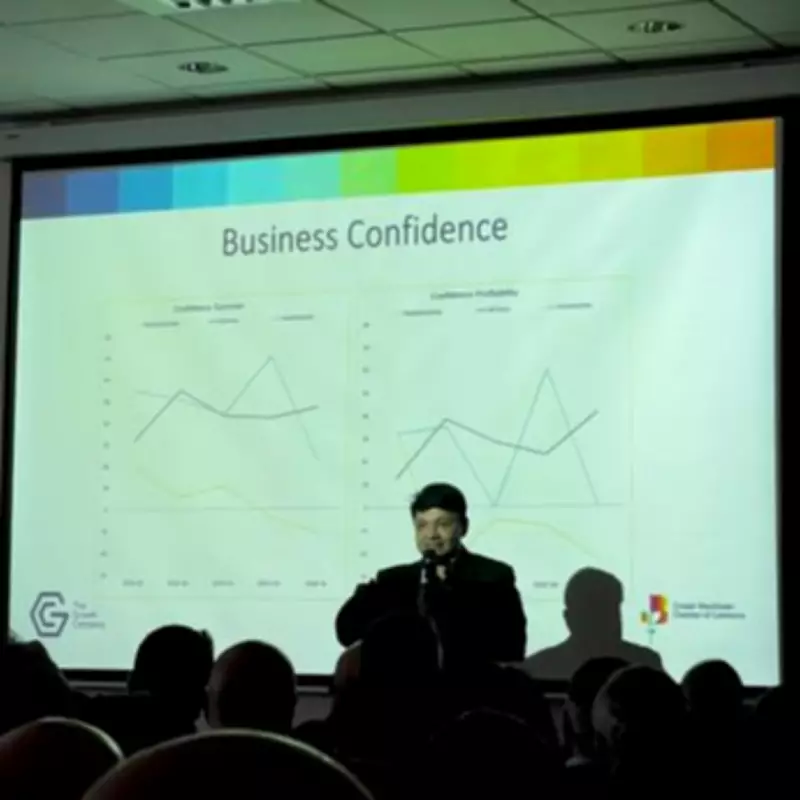
At a recent economic debate held at the Old Fire Station in Salford, business leaders from Greater Manchester Chamber of Commerce and the Growth Company delivered a cautiously optimistic assessment of the local economy. While they reassured attendees that there is "no cliff edge" and a recession remains unlikely, the discussion was underscored by concerns over the nascent Iran war and its potential ripple effects.
Confidence Fragile as Manufacturing Struggles
The latest Quarterly Economic Survey, presented by Chamber economist Subrahmaniam Krishnan-Harihara, revealed a slight uptick in the GM Index of business confidence, rising from 14.9 to 15.4. This improvement is primarily driven by the service sector, which includes life sciences, and continues to demonstrate solid performance. However, the manufacturing sector faces significant headwinds, grappling with high costs and limited long-term visibility in project pipelines.
Rupert Greenhalgh of the Growth Company echoed these sentiments, noting that manufacturers, in particular, are contending with persistent cost pressures and widespread skills shortages across industries. Despite these challenges, there is no significant uptick in insolvency risks, painting a picture of muted but stable growth.
Iran War: An Unpredictable Wildcard
The conflict in Iran, being too recent for inclusion in current economic data, looms large as an unpredictable variable. Chamber policy director Chris Fletcher highlighted the difficulty in forecasting its impact, citing President Trump's unpredictable public statements regarding the war's duration. Potential areas of disruption include:
- Logistics and supply chains
- Energy-intensive manufacturing sectors
- The visitor economy, as inflation may curb discretionary spending
Early indicators, such as a decline in export documents processed for Gulf trade and flight disruptions at Manchester Airport, suggest the conflict is already affecting certain sectors. However, Krishnan-Harihara cautioned that these effects could reverse quickly if trade routes reopen and pent-up demand is released.
Long-Term Scenarios and Sectoral Variations
Fletcher outlined potential scenarios based on the conflict's duration:
- Short-term disruption: Manageable price shocks with limited lasting damage.
- Medium-term disruption: Slower growth and rising unemployment.
- Long-term conflict: Prolonged disruption, recession risks, job losses, and higher SME insolvencies.
He emphasized that these are not predictions but possibilities, given the current uncertainty. Krishnan-Harihara added that while the overall economic picture is steady, there are "huge variations" in sector performance, with construction and civil engineering businesses struggling more than others.
Panel Insights: Skills Mismatch and Local Strengths
A concluding panel discussion featured insights from independent economic adviser Dr Nicola Headlam, who described the region's economic stance as "steady as she goes," with a focus on avoiding missteps. Dr Sofia Izquerdio Sanchez, a senior lecturer in economics at Manchester University, pointed out that businesses have endured multiple shocks over the past two decades, from the financial crisis to Brexit, the pandemic, the Ukraine war, and now the Iran conflict.
She highlighted a persistent skills mismatch paradox, where vacancies coexist with unemployment, underscoring ongoing challenges in workforce development. Emilie Smithies of NatWest Venture Banking noted a cautious investment climate, though no obvious slowdown has emerged recently. Matthew Allen, an economics lecturer at the University of Salford, reminded attendees not to overlook local positives, such as Manchester's thriving music economy, buoyed by events like the Oasis reunion and the arrival of the Brits and MOBOs awards.
In summary, while Greater Manchester's economy avoids immediate peril, it navigates a landscape of fragile confidence, sectoral disparities, and the looming uncertainty of geopolitical tensions, all against a backdrop of sluggish growth.