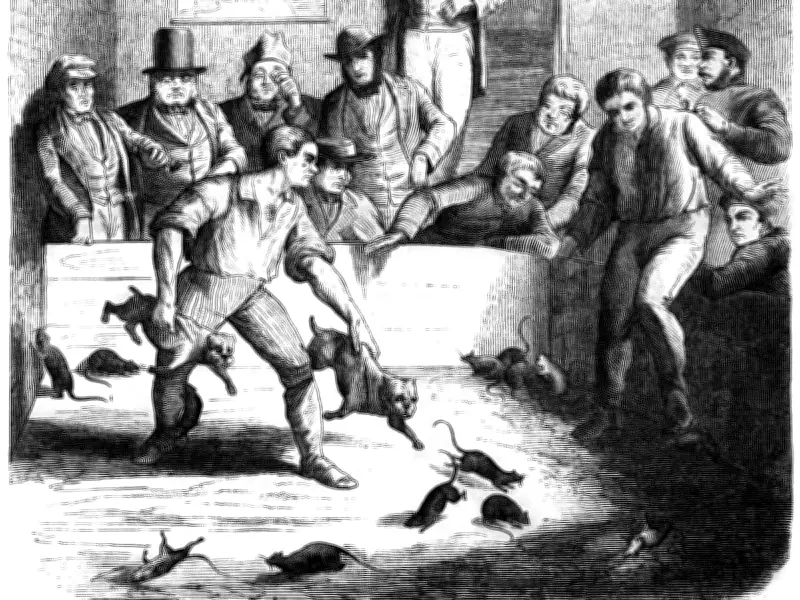
While thousands in the West Midlands have been placing bets on the World Cup, gambling in the region once took a much grimmer form. Rat baiting, a bloody spectacle where dogs were pitted against masses of rodents, was a hugely popular pub pursuit in the mid to late 1800s, historians have revealed.
Historians Uncover Brutal Past
Richard Pursehouse and Ben Cunliffe have delved into archives to expose the widespread nature of rat baiting in the West Midlands. The sport exploded after the 1835 Cruelty Act banned bull and bear baiting, but vermin were exempt from protection, allowing the practice to flourish.
Famous Dogs and Celebrity Dealers
Bets were placed on which dog would kill the most rats within a set time. Stars included Pincher, who dispatched 500 rats in under 30 minutes, and Billy, who killed 100 in five minutes and 30 seconds in 1825. Celebrity dealers like Bill George supplied rats for competitions, acting like modern-day football agents.

Legal Ambiguity and Court Cases
Landlords were often prosecuted for allowing betting on their premises rather than for the baiting itself. In November 1864, the Birmingham Post reported on a ratting sweepstakes at Ryall's Broad Street Tavern, where seven dogs competed. First prize went to Mr Littler's Jacko, who killed seven rats in 57 seconds.
In February 1865, the same newspaper highlighted another event: 'Eight dogs entered and some excellent sport took place. The first prize was carried off by Reece's bitch Boss, 16lb weight, destroying 11 rats in one minute and 56 seconds.'
Undercover Police Operations
On May 3, 1879, the Birmingham Post reported that Thomas Wright, landlord of the Crown Inn in Sedgley, was charged with permitting gaming after an undercover police operation. Officers Booth and Austin witnessed betting on a rat baiting match, with wagers from £3 to £4. Despite Wright's denial, the bench fined him £10 and costs, calling it a 'shocking and disgraceful occurrence'.
High-Profile Case Clarified Law
A Liverpool case in 1871 determined that while killing rats was acceptable, organizing and betting on the spectacle was illegal. The Recorder quashed a conviction for keeping a house for rat baiting, noting that killing rats was not baiting or fighting. However, the discovery of a rat pit with 200 rats, 30 dogs, and 100 people upstairs led to charges.
Landlords Felt the Law's Wrath
In 1863, Juba Charley, landlord of the White Hart beerhouse in Halesowen, was charged with keeping a place for rat baiting. Police found a wire rat pit in a clubroom with 100 to 150 people. Charley cried 'Bring them in, all right, lads' as 20 rats were put in and a dog killed 15. The bench fined him 6s plus costs, and spectators were fined 6d each or faced 21 days' hard labour.
In 1892, Alfred Halliwell, landlord of the Hearty Good Fellow in Dudley, was summoned for using a room for rat baiting. Police found a constructed rat pit, two men with dogs, three dead rats upstairs, and 100 dead rats in the back yard. He was fined 20s and costs.