

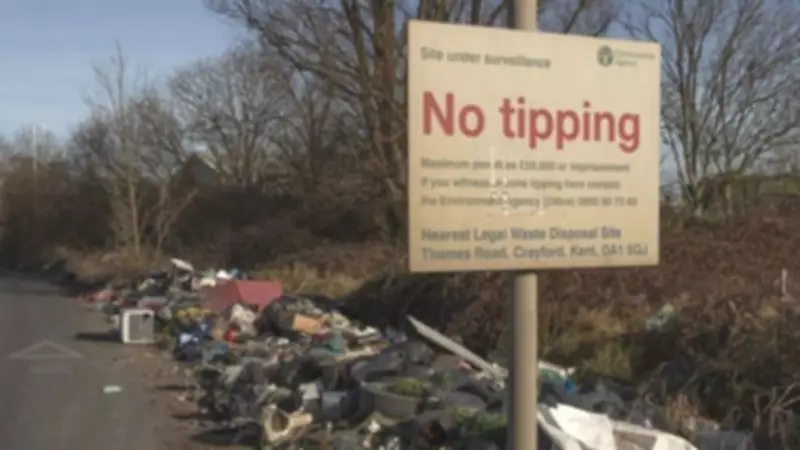
Local authorities across England are set to receive enhanced powers to compel fly-tippers to remove waste from public areas like streets and parks and bear the associated expenses. This initiative is part of a broader Government strategy to expedite enforcement actions and reduce the prolonged delays often associated with prosecutions for illegal dumping.
Conditional Cautions and Unpaid Labour
Under the newly proposed measures, councils will be authorised to issue conditional cautions to individuals caught fly-tipping. These mandates will oblige offenders to complete up to 20 hours of unpaid labour, specifically focused on cleaning the sites they have contaminated. Additionally, they must pay a fine designed to cover administrative and clearing costs, ensuring that taxpayers are not burdened with the financial fallout of such crimes.
Currently, fly-tippers can only face penalties after a conviction, which may include substantial fines, community sentences, or even imprisonment in severe cases. The new proposals aim to streamline this process, allowing for quicker intervention and a more immediate response to environmental violations.

Government Statements and Deterrents
Environment Secretary Emma Reynolds emphasised the rationale behind these measures, stating that the introduction of clean-up squads will shift the cost of waste removal from the public to the offenders themselves. "If you dump rubbish on our streets, you will be joining a clean-up squad and picking up the bill," Reynolds declared, underscoring the Government's commitment to holding perpetrators accountable.
Beyond conditional cautions, the Government is advocating for a series of more aggressive deterrents to combat fly-tipping effectively:
- Direct Seizure: Councils will be empowered to seize funds directly from fly-tippers to finance local cleaning operations.
- Vehicle Seizure: New guidance will advise local authorities on procedures for searching, seizing, and potentially crushing vehicles used in fly-tipping activities.
- Licence Penalties: Ministers are considering adding penalty points to the driving licences of those convicted of fly-tipping, which could ultimately lead to a complete driving ban.
Organised Crime and Enhanced Powers
The Environment Agency (EA) has issued warnings about the increasing involvement of organised crime groups in the waste sector, where illegal dumping is viewed as a low-risk, high-reward enterprise. In response, the EA is poised to acquire police-style powers under the Proceeds of Crime Act. These enhanced authorities will enable officers to conduct searches of premises without a warrant and disrupt the financial operations of large-scale illegal dumping networks.
Funding Challenges and Council Concerns
While the Government has highlighted a £78 billion support package for councils this year, the Local Government Association (LGA) has expressed concerns regarding the sustainability of funding for these enforcement initiatives. The success of the proposed clean-up squads is heavily dependent on consistent financial backing, which remains a point of contention.
Critics have previously pointed out a sentencing gap, where court-imposed fines often fail to cover the actual expenses incurred by councils. These costs include high-tech surveillance measures, such as drones and ANPR cameras, which the Government is now encouraging councils to deploy to catch offenders in real-time.
The LGA reports that fly-tipping imposes a significant financial strain on local authorities, with costs exceeding £19.3 million annually for cleanup efforts alone. In the 2024/25 period, England recorded 1.26 million incidents of fly-tipping. Councils are increasingly taking enforcement action, but pursuing cases through the courts often demands lengthy investigations, high evidential standards, and considerable staff resources, further complicating the fight against this environmental crime.

